
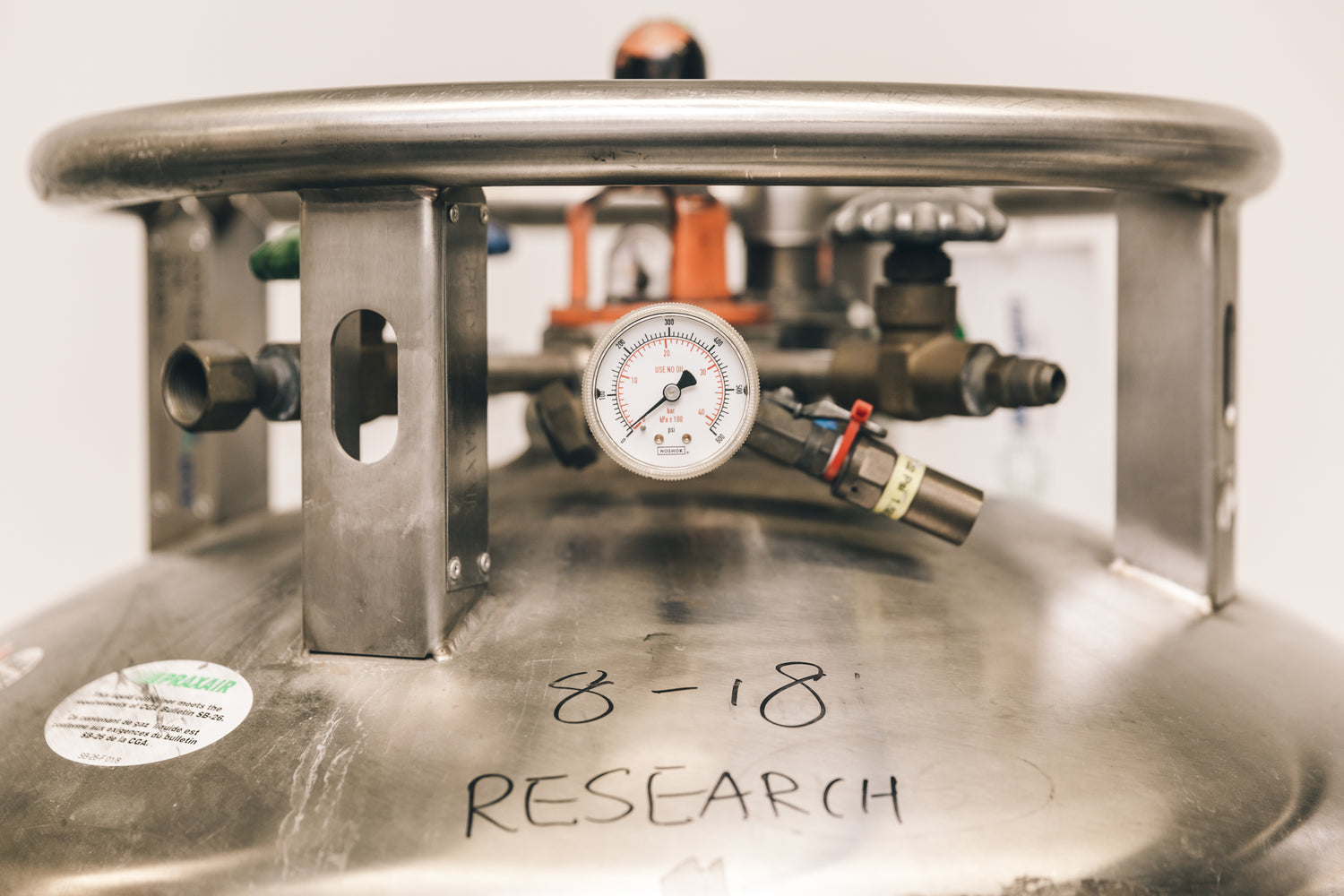
research lab pressure guage machine with pressure dial

Mycology Dictionary

Welcome to the Spore Supplies Mycology Dictionary, a beginner-friendly glossary of key terms used in mushroom cultivation and fungal science. Whether you're exploring sterile techniques or learning how mycelium grows, this resource is designed to support UK-based growers at every stage.

A

Agar

A gel set from red algae and mixed with nutrients, poured into plates to grow and inspect fungal cultures. Growers use it to check genetics are clean before moving them to grain.

Learn More About Agar

All-In-One (AIO) Bag

A single sterile bag holding both grain and substrate, separated until you mix them. You inject your culture, and the bag colonises and fruits with no substrate preparation.

Learn More About All-In-One (AIO) Bag

Autoclave

A pressure steriliser that uses pressurised steam, from 121°C upwards, to kill all microorganisms, including their resistant spores. At Spore Supplies, every bag we sell as sterile is autoclaved for 2 hours 30 minutes.

Learn More About Autoclave

C

Casing Layer

A thin layer of moist, low-nutrient material, usually coco coir, spread over colonised substrate. It holds humidity at the surface and encourages even pinning.

Learn More About Casing Layer

Cobweb Mould

A fast-spreading, wispy grey-white mould that grows across the surface of substrate or casing. It looks finer and fluffier than mycelium, which grows in denser, rope-like strands.

Learn More About Cobweb Mould

Colonisation

The stage where mycelium grows through grain or substrate until it is fully white. Colonised material is then either used as spawn or put into fruiting conditions.

Learn More About Colonisation

Contamination

Any unwanted organism, such as a mould, bacteria, or yeast, competing with your mycelium for the same food. Most contamination starts with a lapse in sterile technique.

Learn More About Contamination

Culture

A living sample of a fungus, usually mycelium, kept on agar or in liquid to store, clean up, or expand a particular genetic.

Learn More About Culture

CVG

Coco coir, vermiculite, and gypsum (CVG), the classic bulk substrate for monotubs. Coir holds water, vermiculite keeps it airy, and gypsum adds calcium.

Learn More About CVG

F

Field Capacity (FC)

The point where a substrate holds as much water as it can without free water pooling. A common check is a firm squeeze, which should release only a few drops.

Learn More About Field Capacity (FC)

Filter Patch

A microporous panel on a grow bag that lets gases pass while keeping contaminants out. It lets mycelium breathe in a sealed bag.

Learn More About Filter Patch

Flow Hood

A laminar flow hood blows HEPA-filtered air in a steady stream across your workspace, so airborne contaminants are pushed away from open cultures. It's the standard tool for agar and grain work.

Learn More About Flow Hood

Flush

One wave of mushrooms from a block, bag, or tub. After harvesting and a rest, most substrates produce several flushes, each usually smaller than the last.

Learn More About Flush

Fresh Air Exchange (FAE)

Replacing stale, carbon dioxide-rich air around fruiting mushrooms with fresh air. Too little FAE gives long, thin stems. Too much dries the surface.

Learn More About Fresh Air Exchange (FAE)

Fruiting Body

The mushroom itself: the part of the fungus that grows above the substrate to release spores. Everything before it is the mycelium doing the groundwork.

Learn More About Fruiting Body

Fruiting Conditions

The humidity, fresh air, light, and temperature that tell colonised mycelium to switch from growing to producing mushrooms. The right settings vary by species.

Learn More About Fruiting Conditions

G

Grain Spawn

Sterilised grain fully colonised by mycelium, used to inoculate bulk substrate. Rye, wheat, and millet are the most common grains.

Learn More About Grain Spawn

Grain-to-Grain (G2G)

Transferring colonised grain spawn into fresh sterile grain bags to multiply it. One bag can seed several more, if your technique is clean.

Learn More About Grain-to-Grain (G2G)

Gypsum

Calcium sulphate, added to grain and substrate to supply calcium and sulphur. In grain it also stops kernels clumping together.

Learn More About Gypsum

H

Hypha (plural: Hyphae)

A single microscopic thread of fungal cells. Hyphae branch and fuse to form mycelium, releasing enzymes that break down the food around them.

Learn More About Hypha (plural: Hyphae)

I

Injection Port

A self-healing rubber port on a grow bag or jar lid. You inject culture through it with a sterile needle, without opening the bag.

Learn More About Injection Port

Inoculation

Introducing a culture, such as liquid culture, spores, or grain spawn, into a sterile medium to start colonisation.

Learn More About Inoculation

Isolation

Selecting a clean, vigorous section of growth on agar and moving it to a fresh plate. Repeating this leaves a single, contamination-free culture.

Learn More About Isolation

L

Liquid Culture (LC)

Live mycelium growing in a sterile nutrient broth. It colonises grain faster than spores and carries one consistent genetic.

Learn More About Liquid Culture (LC)

M

Master Mix

A fast, high-yield substrate of hardwood sawdust and soy hulls, also sold as Masters Mix. Our Master Mix pellets are 60/40 oak to soy hull.

Learn More About Master Mix

Metabolites

Amber or yellow droplets that mycelium releases, often under stress or when competing with contamination. They aren't a contaminant themselves, but worth watching.

Learn More About Metabolites

Monotub

A storage tub converted into a fruiting chamber with holes for fresh air exchange, used to fruit bulk substrate at home.

Learn More About Monotub

Mycelium

The network of hyphae that forms the main body of a fungus. It's the white growth that colonises grain and substrate before any mushrooms appear.

Learn More About Mycelium

Mycorrhizae

Partnerships between fungal mycelium and plant roots, where the fungus trades water and minerals for sugars from the plant. Many UK woodland fungi live this way.

Learn More About Mycorrhizae

P

Pasteurisation

Heating a substrate enough to reduce competing microbes, but below the point that kills them all. It suits low-nutrient substrates such as straw and CVG. Nutrient-rich ones need full sterilisation.

Learn More About Pasteurisation

Pins (Primordia)

The first tiny mushroom formations to appear once fruiting conditions are right. Pinning is the moment colonisation turns into a crop.

Learn More About Pins (Primordia)

R

Ready-to-Fruit Block

A substrate block that is already fully colonised. You cut it open, give it fruiting conditions, and harvest. It's the quickest route to fresh mushrooms.

Learn More About Ready-to-Fruit Block

S

Spawn Ratio

The proportion of grain spawn to bulk substrate, written as a ratio of spawn to substrate. More spawn means faster colonisation and less chance for contamination to get a foothold.

Learn More About Spawn Ratio

Spore

A microscopic reproductive cell released by a fungus. Each spore is genetically unique and, in the right conditions, can germinate into new mycelium.

Learn More About Spore

Spore Solution

Spores suspended in sterile water. Because every spore differs, results vary more, and germination is slower than with a liquid culture.

Learn More About Spore Solution

Still-Air Box (SAB)

A clear tub with arm holes that keeps air still while you work, so airborne contaminants settle rather than drift onto open cultures. It's a low-cost alternative to a flow hood.

Learn More About Still-Air Box (SAB)

Sterilisation

Killing every living organism in a material, including resistant bacterial spores. In mycology, that means pressurised steam, from 121°C upwards, in an autoclave or pressure cooker.

Learn More About Sterilisation

Strain

A genetically distinct line within one species, selected for traits such as yield, colour, or temperature tolerance.

Learn More About Strain

Substrate

The material mushrooms fruit from, such as CVG, Master Mix, straw, or hardwood. Grain feeds the mycelium, and substrate is where the crop grows.

Learn More About Substrate

T

Trichoderma

The most common green mould in mushroom growing. It often starts as white patches that look like mycelium, then turns bright green as it spores.

Learn More About Trichoderma